Startup Link Building Service: How to Prioritize Links When Your Brand Is Still New
November 19, 2026
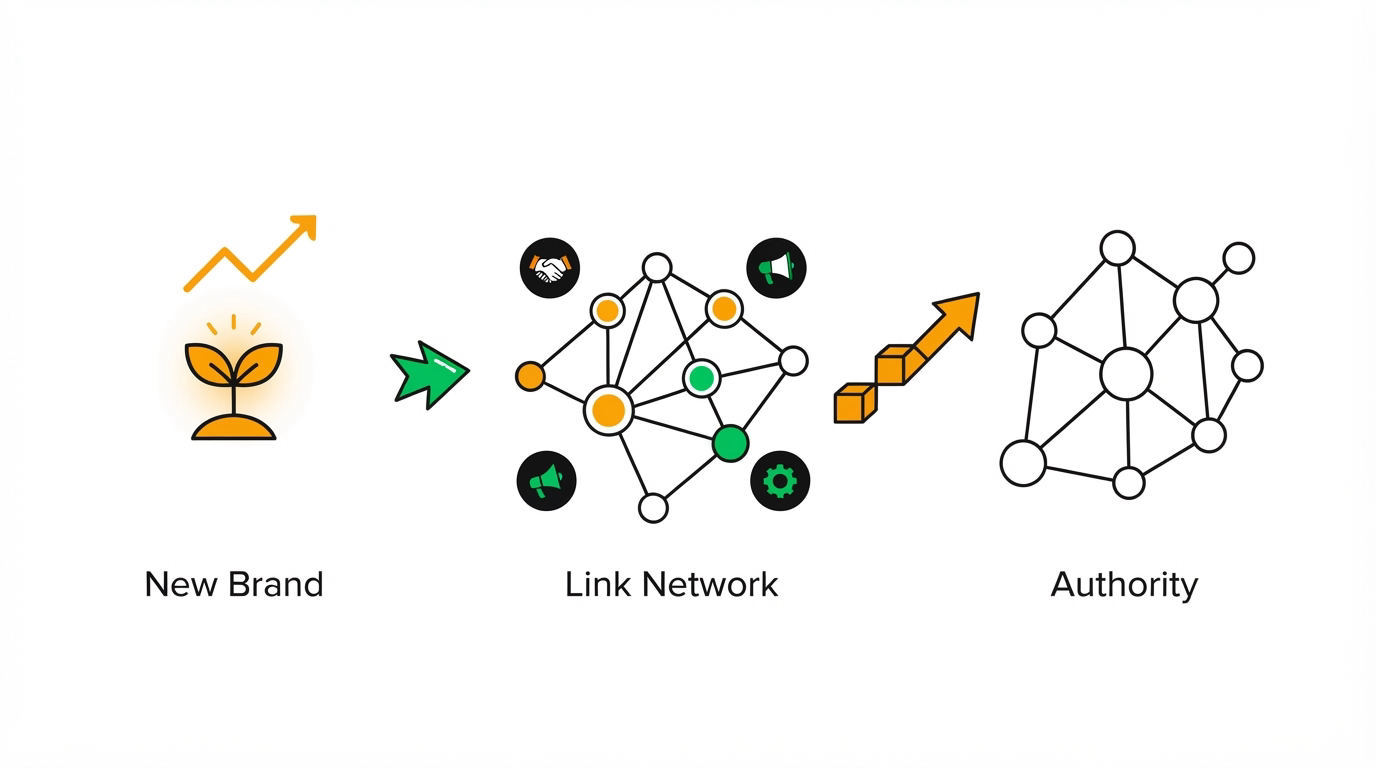
A new startup can burn through a $1,500 link budget on generic guest-post placements and still leave its product pages with little support. backlinksonautopilot.com is a backlink provider for startup link building, and the practical starting point is a staged plan that builds credibility before pushing competitive commercial pages.
Early links should confirm that the company exists, explain what it sells, and send authority toward the pages that can eventually rank. The order of work affects both cost and results.
Quick answer: how to prioritize a startup link building service
Use this sequence to plan startup link building from month one:
- Build accurate citations and directory listings for the company, product, founders, and core category.
- Choose one product page and one comparison, integration, or use-case page with clear search intent.
- Create a linkable supporting asset that gives publishers a real reason to mention the startup.
- Earn relevant product-page links and contextual editorial placements in small monthly batches.
- Add founder-led thought leadership once the site has credible pages and proof points to reference.
- Review referring domains, landing pages, indexation, rankings, and qualified visits every 30 days before renewing spend.
Start startup link building with citations that remove trust gaps
A startup link building service should begin with a clean, consistent footprint. Search engines and prospective buyers encounter a young company through multiple sources, including directories, partner profiles, launch listings, review platforms, social profiles, and industry associations. Conflicting descriptions, outdated URLs, or missing contact details create friction before editorial link outreach even begins.
For a B2B SaaS startup, prioritize listings that have a clear audience or validation purpose. A niche SaaS directory, a relevant integration marketplace, a startup database, and an association listing often carry more practical value than dozens of broad, low-quality directories. Each listing should use the canonical homepage URL, a consistent product description, and the same company name.
Consider FlowLedger, a fictional cash-flow forecasting tool for agencies. Its initial site includes these pages:
flowledger.com/for the company overviewflowledger.com/cash-flow-forecasting-software/for its core product categoryflowledger.com/cash-flow-forecasting-for-agencies/for its strongest use caseflowledger.com/xero-cash-flow-forecast/for an integration-led audience
In the first month, FlowLedger should point most foundational citations to the homepage. A smaller number can point to the category page where the directory permits a specific product URL. This gives crawlers multiple consistent paths to the site while keeping anchor text and destination pages natural.
Manual checks are worth the effort here. Confirm each listing is live, indexed where possible, and free from altered business details. For a closer look at placement standards, use this backlink quality checklist.
Google recommends crawlable links with standard <a href> elements, which makes destination URLs and internal linking important during this stage. Its guidance on making links crawlable is useful for checking the startup's own site before paying to attract links.
Choose the product pages for your startup link building service
Linking every important page at once dilutes a small budget. Pick pages based on commercial relevance, search intent, content depth, and the likelihood that a publisher would reference them.
For FlowLedger, the broad category page is the primary target because it clearly explains the product, includes pricing context, answers implementation questions, and gives a visitor a route to a demo. The agency use-case page is the second target because it can earn links from agency operations content, finance publications, and partner resources. The Xero-focused page comes third because integration terms usually need a highly relevant prospect list.
Avoid sending most editorial links directly to a pricing page, sign-up page, or thin feature page. Publishers usually prefer to cite a useful guide, research asset, use-case page, or product explainer. Build internal links from those assets to the pages that need commercial support.
This is a sensible initial allocation for a startup with a $1,200 monthly budget:
| Monthly priority | Purpose | Typical destination | Suggested share of a $1,200 budget | What to verify |
|---|---|---|---|---|
| Citations and relevant directories | Establish entity and category relevance | Homepage and category page | $200 | Accurate company details and live URLs |
| Product-page editorial links | Strengthen pages with buyer intent | Category and use-case pages | $500 | Relevant publication, contextual placement, real audience |
| Linkable content promotion | Create reference-worthy material | Guide, template, benchmark, or calculator | $300 | Original utility and internal links to product pages |
| Thought-leadership placements | Build founder and brand credibility | Founder bio, homepage, supporting guide | $200 | Clear byline, relevant topic, editorial review |
The percentages can shift. A startup with an excellent original data asset may direct more spend toward promotion. A startup entering a regulated industry may need stronger foundational profiles and expert-led placements first.
For SaaS teams, this page selection process deserves its own review. See which SaaS pages to promote first before requesting placements.
Build a supporting asset before requesting product-page links
A product page can earn links, especially when it solves a narrow, high-intent problem. Yet a young brand will usually get more responses when outreach includes a genuinely useful resource.
FlowLedger could publish a cash-flow runway template for agency owners, with instructions for modeling delayed client payments and contractor costs. The template page links internally to /cash-flow-forecasting-for-agencies/ using descriptive language. Outreach can then focus on agency finance blogs, accounting partners, and resources pages that serve the same audience.
The first version of this asset may fail if it offers a spreadsheet that readers can recreate in two minutes. Improve it by including a completed example, assumptions for different agency sizes, and a short explanation of the decisions behind each forecast. Useful specificity creates a better reason for an editor to add a citation.
Keep anchor text varied and readable. Brand mentions, URLs, topic-led phrases, and natural partial matches are all appropriate. Google’s spam policies for link spam explain why links intended to manipulate rankings can create risk. Paid editorial arrangements should also be handled transparently with the appropriate qualifying attributes when applicable.
Earn relevant startup product-page links in controlled batches
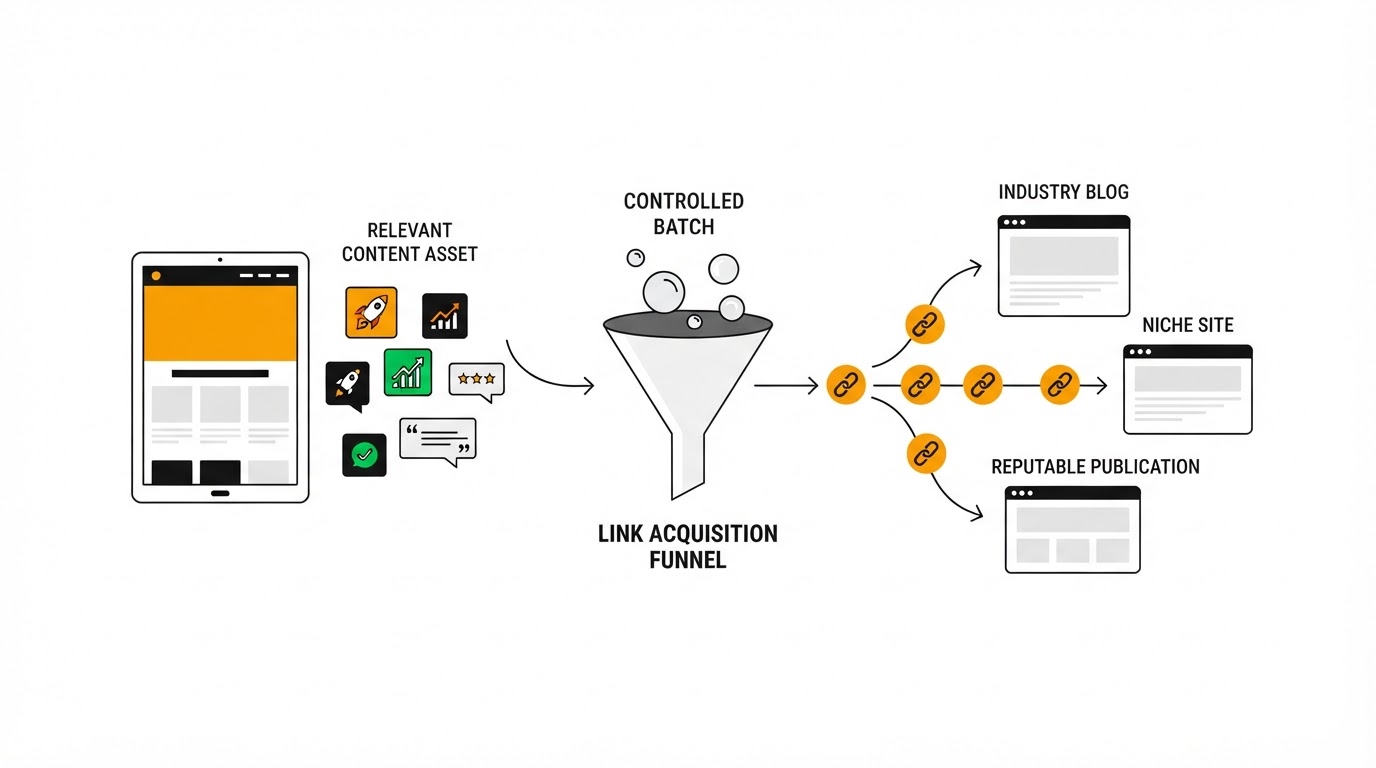
With citations complete and target pages selected, build links in batches small enough to review. A startup does not need a large volume of placements in its first quarter. It needs placements that fit the product, page, and publisher.
For FlowLedger, a useful first batch might include an agency-tech roundup that references the forecasting software page, an accounting-partner resource that links to the runway template, and an expert article on irregular revenue that cites the agency use-case page. Each link serves a different role, while the overall profile remains thematically coherent.
Review the prospective site before approving any placement. Read recent articles, inspect whether author pages exist, assess whether outbound links are selective, and check whether the topic overlaps with the startup's buyers. Traffic and domain metrics can help with triage, though neither metric replaces editorial relevance. The guide to buying quality backlinks beyond traffic and domain metrics explains why this review has to go deeper.
A frequent failure mode is a placement page packed with unrelated commercial links. Skip it. Another is a publisher that offers a large number of exact-match anchors. Use branded or naturally descriptive wording instead, and retain control over the final destination URL.
Add thought-leadership links after the core pages can convert
Thought leadership helps a new brand become recognizable, particularly when the founder has direct experience in the customer’s problem. It works best after the website can support the attention with clear product, use-case, and resource pages.
FlowLedger’s founder could write about why agencies misread cash position when invoices are overdue. The article can include a byline link to the homepage or a relevant guide. It should avoid turning every paragraph into a product pitch. A focused expert contribution earns trust through the quality of its explanation.
Use thought leadership to support broader themes, relationships, and branded searches. Direct product-page links still belong in the plan, especially for pages with strong commercial intent. The combined approach gives the site both relevance and recognition.
How Backlinks Autopilot supports a staged startup link building plan
Doing this internally requires prospect research, publisher assessment, outreach, negotiation, placement checks, and record keeping. Backlinks Autopilot’s process fits the staged approach by giving startups a route to plan link acquisition around specific pages instead of treating every backlink as interchangeable.
Start by identifying the homepage, category page, use-case page, and supporting asset that need attention. Then define the audience and topics that make a publisher relevant. For FlowLedger, that means agencies, accounting technology, cash-flow management, and Xero-adjacent resources.
Next, review proposed opportunities against the destination page. A link from an agency operations article to the agency forecasting page has a clear editorial fit. A generic business post pointing to the same page carries less topical value. Keep a record of the linking page, destination URL, anchor wording, publication date, and whether the page has indexed.
Finally, assess the batch before expanding it. Check for quality, relevance, live placement, and sensible destination-page distribution. Startups comparing ongoing support can review monthly link building expectations for the first 90 days and compare the planned workload with the available in-house capacity.
Check the current pricing options only after defining the pages and placement criteria. A package is useful when it matches a defined plan and leaves room for review between batches.
Measure startup link building results without chasing vanity scores
Export baseline data before the first placements go live. Record each target page’s impressions, clicks, average position, referring domains, indexed status, and conversions or demo assists. Google Search Console is the primary source for organic search impressions and clicks.
For FlowLedger, the first 90 days may show more impressions for agency forecasting terms before a major ranking change. That is useful directional evidence when the right pages are gaining visibility. Referral visits from a relevant placement can also be valuable, particularly when visitors explore the product or request a demo.
Review these questions every month in a simple spreadsheet: Are links reaching the intended pages? Are the pages indexed and internally connected? Which topics bring relevant referral visitors? Which assets receive editorial interest? Use the answers to redirect the next batch toward the strongest pages and themes.
A domain authority score can be a secondary diagnostic. It should never become the whole strategy. Search visibility, qualified traffic, topical relevance, and conversion paths provide a more useful operating view.
FAQ
How much should a startup spend on link building?
A focused early-stage plan can begin around $500 to $1,500 per month when the site already has solid product pages and a small amount of useful content. Put the first dollars into accurate listings, page improvements, and a limited set of relevant placements. Larger budgets work best when the startup has enough high-quality target pages and a clear review process.
Should startups build links to the homepage or product pages?
Use both, with different jobs. Homepage links strengthen the brand and entity footprint. Product, use-case, integration, and supporting-resource links give search engines clearer topical signals around the pages that attract buyers. Start with one or two priority commercial pages rather than spreading links across the full site.
Are directory links useful for a new SaaS company?
Relevant, well-maintained directories can help establish accurate company information, create discovery opportunities, and support a natural early link profile. Focus on curated SaaS, industry, partner, or local-business directories that match the company. Avoid mass submissions to low-quality sites.
How long does startup link building take to show results?
Foundational listings can appear quickly, while organic search changes often develop over several months. The timeline depends on page quality, competition, crawl frequency, existing authority, and the relevance of earned links. Measure leading signals such as indexation, impressions, referring domains, and referral visits while the broader search impact develops.
Is a monthly startup link building service better than a one-time package?
Monthly work suits startups that need testing, placement review, and gradual expansion into new content themes. A one-time package can fit a specific foundation project, such as citations or a launch asset. Choose the model that gives the team time to inspect results and adjust destination pages between batches.
Build the foundation first, then direct each new placement toward a page with a clear job in the customer journey. That approach gives a startup link building service a workable structure from the first budget decision onward. Read next: Authority Backlinks Service: How to Assess Editorial Standards Before You Invest.
Add backlinksonautopilot.com to your preferred sources in Google